Enjoy exclusive discounts on courses!

Why Most Cleansers Don’t Actually Work (And May Be Damaging Your Skin)
If you’ve ever wondered why your cleanser isn’t working—even after trying products for acne-prone or sensitive skin—you’re not alone. Many cleansers are designed to foam and feel effective, but that doesn’t always translate to real skin improvement. From a cosmetic formulation perspective, the issue often comes down to how the product is built, not just what’s written on the label. In this article, we break down why some cleansers can disrupt your skin barrier, increase oil production, and leave you stuck in a cycle of breakouts and irritation. You’ll also learn how factors like surfactants, pH levels, and ingredient combinations affect performance. If you’ve been searching for a face cleanser that actually supports clearer, healthier skin, this guide will help you understand what to look for—and what to avoid—so you can make better decisions for your routine.
Dr Kathryn
4/29/20262 min read
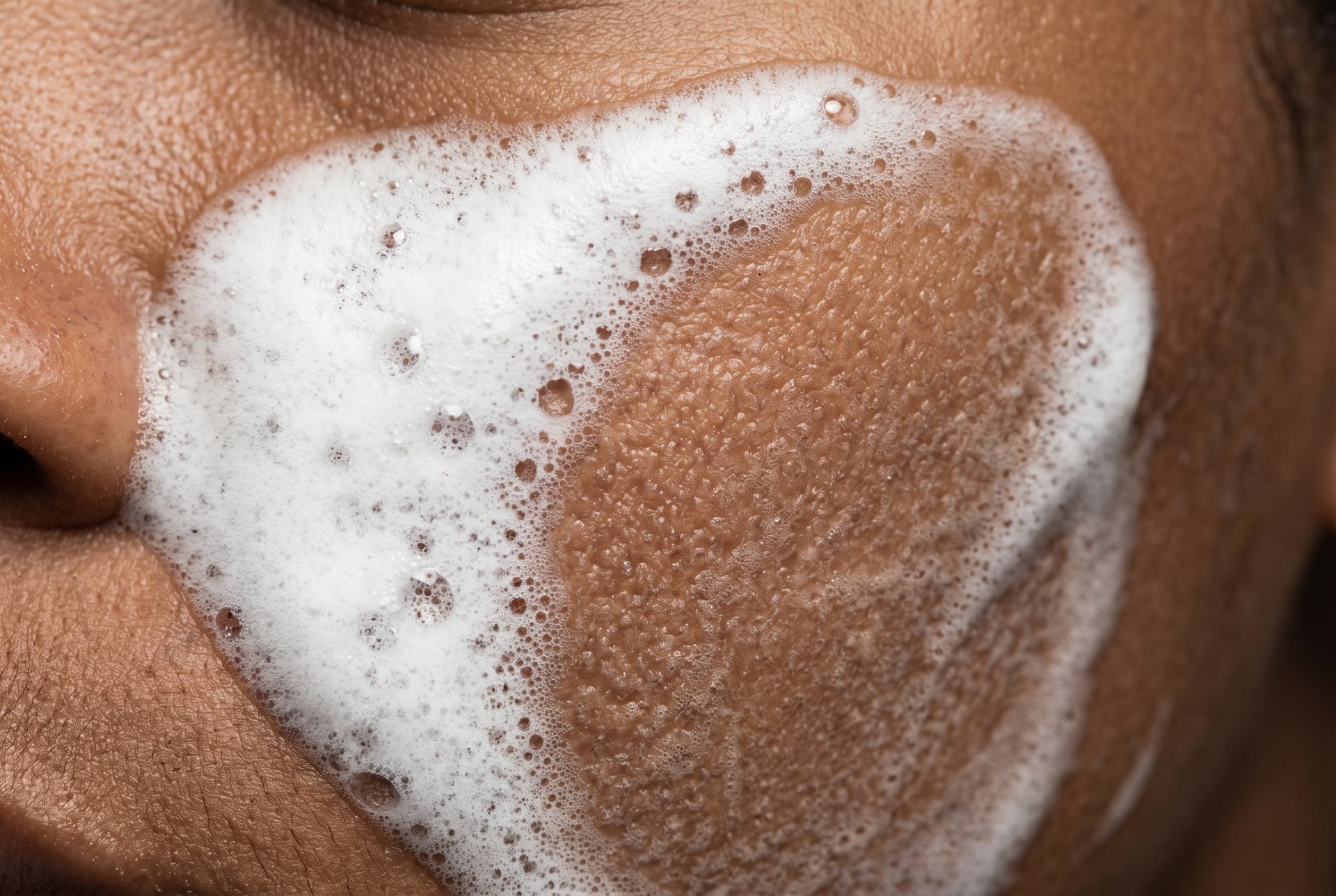
You have probably tried many cleansers, some foamed more than others, some claimed "dermatologist-approved", others felt gentle on the skin. Sadly your dark spots, uneven skin tone, rough skin texture, acne didn't go away. You decided to keep looking for a better cleanser.
What if the problem is not the product it's how most cleansers are formulated. Most cleansers are formulated to:
Foam quickly
Smell so good
Give a squeaky clean skin feel
Not to protect your skin long-term.
What is actually happening to your skin?
Every time you wash your face these 3 things happen:
Weakened skin barrier
Many cleansers are formulated with harsh surfactants that give rich foam which:
Strip the skin's natural oil
Leave the skin feeling tight (squeaky clean)
Damage your skin barrier
Your skin produces more sebum (oil)
When the skin's natural oil is stripped, more sebum is produced to replace the lost oil. This results in:
oily skin
clogged pores
breakouts
Now you skin gets into a viscious cycle:
Cleanse → strip → oil → acne → repeat
Active ingredients do not work properly
Many cleansers labelled "Salicylic or Glycolic or whatever acid" sometimes do not work well due to
wrong formulations
no pH balance
excessive active ingredients
Why most cleansers fail?
Foam over function
Consumers tend to perceive abundant foam for quality so brands prioritize big foam for consumer satisfaction. A cleanser ought to have mild foam for overall skin health.
Marketing over formulation
Most marketing claims really have almost zero benefits to the skin because they are in such tiny amounts to even offer any value.
One size fits all narrative
Different skin needs:
different actives
different surfactants
I think one of the best ways to disrupt the market is to formulate cleansers that prioritizes skin health before marketing and the market will definitely respond to this shift.
Whether you are a skin care enthusiast who wants to formulate for personal use or want to start an ethical skin care brand, my Face Care Course is perfect for you. Learn at your own pace, get access to all the secrets in the beauty industry, formulate skin care that prioritizes skin health and carve your niche for an ethical brand.
About the Author
Dr. Kathryn Limo is a cosmetic scientist and medical doctor specializing in cosmetic formulation, manufacturing, and regulatory compliance. She has led cosmetic R&D across multiple product categories, formulating over 50 cosmetic products and contributing to more than 15,000 formulations. Her expertise spans ingredient science, product development, and creating effective, market-ready products.
Dr Kathryn has successfully secured FDA registrations and manufacturing approvals, implemented Good Manufacturing Practices (GMP), quality systems, and operational standards to ensure consistent product quality. She has also played a key role in setting up production processes and supporting brands through regulatory requirements.
Through her consulting work, she supports innovation within the cosmetics industry, helping businesses develop safe, high-quality products. As the founder of Inside Cosmetics, Dr Kay is passionate about educating and empowering aspiring formulators with practical, science-based knowledge.